 Español
 English
 日本語
日本語 Español
 Deutsch
 عربى
عربى
Open a bag of dry kibble without a proper closure and the clock starts immediately. Fats in the food begin oxidizing, moisture from the air softens the texture, and within days the product that smelled fresh in the warehouse smells stale in the consumer's kitchen. For pet food brands, that outcome is not just a quality failure — it is a brand trust failure. Resealable pet food bags exist to prevent exactly this. The zipper is no longer a premium add-on; across the global pet food aisle, it has become the baseline expectation for any product consumed over multiple sittings. This guide covers what drives that shift, how to choose between closure types, which material structures deliver genuine barrier performance, and how to match bag style to product weight — so that every bag you send to market protects the product and the brand behind it.
Contenido
- 1 Why Resealability Has Become the Standard in Pet Food Packaging
- 2 Slider Zipper vs Press-to-Close: Which Closure Is Right for Your Bag
- 3 Material Structure: Why Aluminum Foil + LDPE Is the Preferred Choice
- 4 Matching Bag Style to Product Weight: From 1 kg Treats to 20 kg Kibble
- 5 Food Safety Certifications: What ISO 9001, BRC, and HACCP Mean for Buyers
- 6 Custom Printing on Resealable Pet Food Bags: What Brand Owners Should Know
Why Resealability Has Become the Standard in Pet Food Packaging
Dry pet food — kibble, treats, pellets, bird feed — shares a common vulnerability: natural fats. Most formulations contain animal fat as both an energy source and a palatability enhancer. When exposed to oxygen, those fats oxidize and turn rancid. The process is gradual but irreversible, and consumers notice it as an off-smell long before they identify it as a food safety issue. A properly sealed bag slows that process significantly. A bag with no closure mechanism at all, once opened, provides no protection whatsoever.
Moisture is the second threat. Dry kibble is manufactured to a water activity level low enough to inhibit microbial growth — typically below 0.65 aw. Ambient humidity, especially in tropical and coastal markets, can raise that level once the bag is open and the barrier is broken. Softened texture and mold growth are the downstream consequences. A resealable closure reinstates the barrier after every feeding, dramatically slowing moisture uptake between uses.
Stand-up flexible pouches are the fastest-growing format in the pet food category, driven directly by the consumer demand for resealability and convenience. Pet owners in urban households increasingly buy mid-size bags (2–10 kg) that last two to four weeks — long enough that closure performance is tested every single day. Brands that deliver consistent freshness through that consumption window earn repeat purchases. Those that don't lose them to the next shelf competitor.
Slider Zipper vs Press-to-Close: Which Closure Is Right for Your Bag
Not all resealable closures are the same. The two dominant options — slider zippers and press-to-close (zip-lock) zippers — serve different use cases, and choosing the wrong one for the product weight and consumer context creates usability problems that show up in reviews and returns.
| Feature | Slider Zipper | Press-to-Close Zipper |
|---|---|---|
| Operation | Single-hand slide motion | Two-hand press along full width |
| Seal reliability | Consistent — slider locks the profile closed uniformly | Variable — depends on even hand pressure |
| Best weight range | 5 kg – 20 kg (wide bags, heavy loads) | 0.5 kg – 5 kg (narrow bags, lighter loads) |
| Consumer experience | Easy one-motion open and close; visible lock position | Simple for small bags; tiring for wide openings |
| Cost | Slightly higher component cost | Lower component cost |
For bags in the 5–15 kg range, the slider zipper is the clear functional choice. A wide bag opening — necessary for scooping kibble — is difficult to press-seal reliably. Consumers routinely leave press-close zippers incompletely sealed on large bags, which defeats the purpose entirely. The slider travels a fixed track and locks mechanically, removing that variable. slider zipper pouches for 5–15 kg pet food are the industry-standard choice for mid-to-large kibble bags precisely because the closure performance holds up through weeks of repeated use.
Press-to-close zippers remain practical for smaller treat bags and single-serving formats where the opening width is narrow and the consumer uses the product quickly. For a 500 g training treat pouch or a 1–2 kg cat food bag, the press closure is sufficient, less expensive, and familiar to consumers. The decision ultimately comes down to bag width and usage frequency — wider bag, heavier product, higher frequency of use all point toward the slider.
Material Structure: Why Aluminum Foil + LDPE Is the Preferred Choice
The zipper controls what happens at the top of the bag after opening. The laminate structure controls what happens through the bag wall at all times — before opening, during storage on shelves, and between each resealing. These are two separate barrier systems, and both must perform for the product to stay fresh.
Aluminum foil is the most effective barrier material available for flexible packaging. Its structure is continuous and non-porous at the molecular level, blocking oxygen, moisture vapor, light, and odor migration simultaneously. A typical three-layer structure for pet food bags — PET outer layer / aluminum foil middle layer / LDPE inner layer — provides comprehensive protection across all three primary spoilage mechanisms: oxidation, moisture ingress, and light degradation of sensitive nutrients.
The inner LDPE (low-density polyethylene) layer deserves specific attention. LDPE is food-grade, flexible, and heat-sealable, making it the standard choice for the layer that contacts the food directly. Its low modulus means it conforms easily during filling and sealing without cracking, and it maintains integrity at the seal line — critical for preventing micro-leaks that compromise barrier performance without being visually obvious. Food-grade LDPE is also free from the plasticizers and additives present in industrial polyethylene grades, meeting the food contact requirements of major regulatory bodies including FDA and EU 10/2011.
An alternative that appears in lower-cost bags is metallized PET (VMPET) in place of aluminum foil. VMPET uses a vacuum-deposited aluminum layer measured in nanometers rather than the 7–9 micron foil layer in true aluminum foil laminates. The barrier performance difference is measurable: aluminum foil laminates achieve oxygen transmission rates (OTR) below 0.5 cc/m²/day, while VMPET typically ranges from 1–5 cc/m²/day. For products with high fat content or long shelf life targets, that gap matters. For a deeper look at how these two structures compare in real-world pet food applications, the high-barrier pet food packaging material comparison covers the selection criteria in detail.
Matching Bag Style to Product Weight: From 1 kg Treats to 20 kg Kibble
Bag style is not purely aesthetic. The structural format determines how the bag stands, fills, seals, and survives the supply chain. Matching the right style to the product weight and retail context is as important as the material and closure selection.
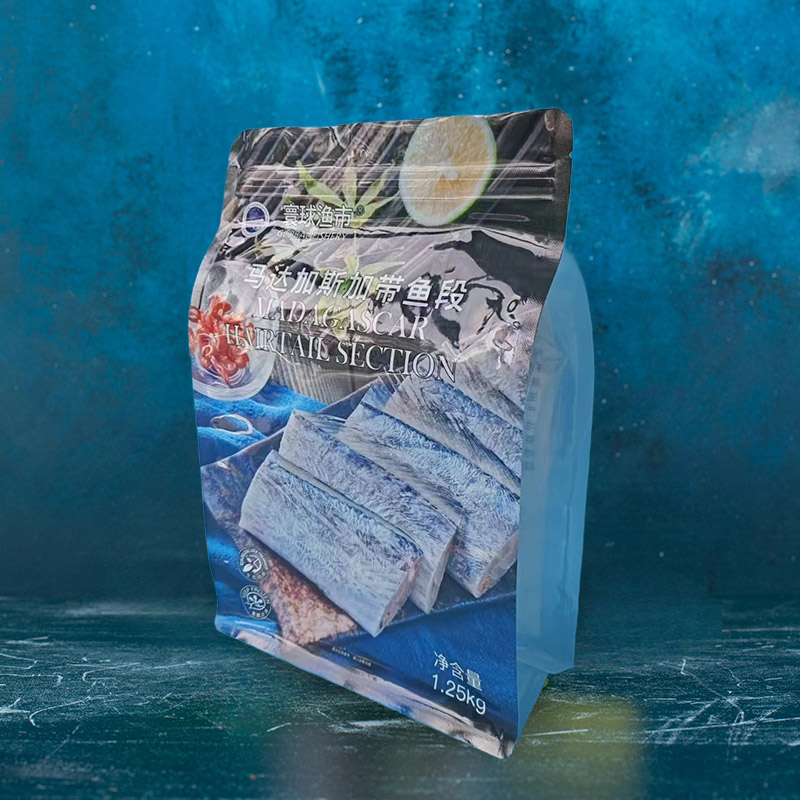
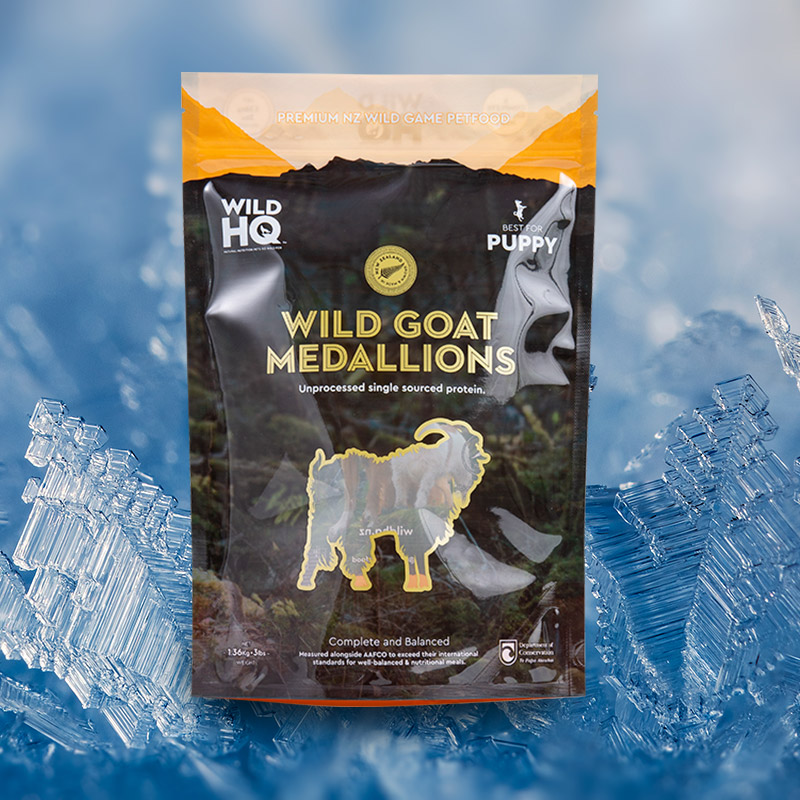
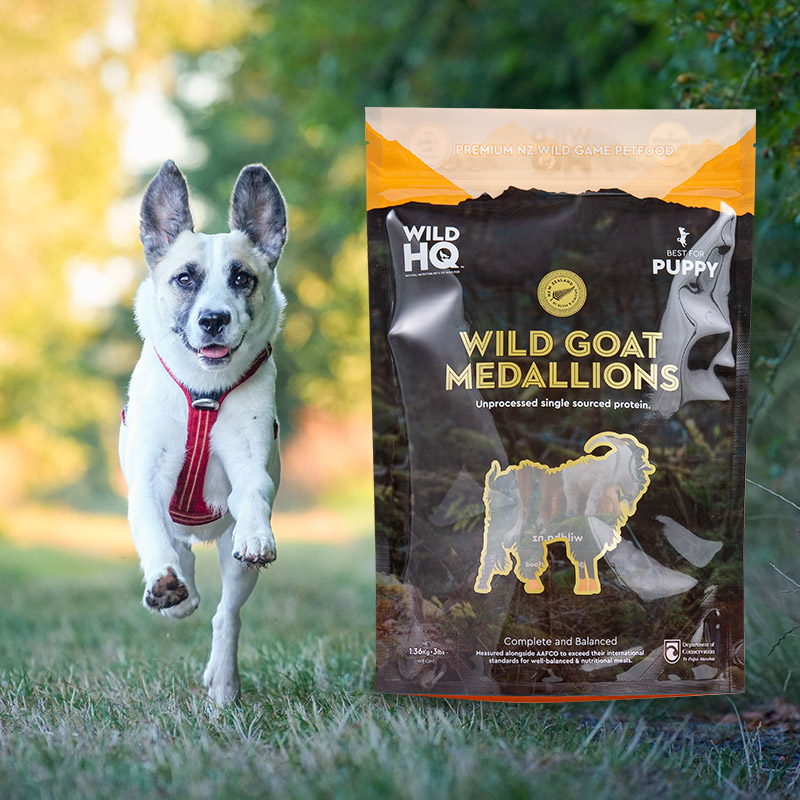
- Box pouch / flat-bottom pouch (1–5 kg): Also called the box bottom or five-panel pouch, this format stands upright on shelf without support, has four printable flat panels, and offers a premium appearance that positions well in the pet specialty and online retail channels. The structured base allows stable stacking. For dog treats, training snacks, and premium cat food in the 1–5 kg range, the box pouch has become the preferred format among brand owners seeking strong shelf presence. stand-up pouch bags for dog treats in 1–5 kg sizes offer this combination of visual impact and functional resealability.
- Side gusset bag (5–15 kg): The side gusset format is the workhorse of the mid-to-large pet food category. Gussets on both sides allow the bag to expand to accommodate high fill volumes while maintaining a flat front and back panel for print real estate. The format is structurally strong under the compressive loads of palletized shipping. A slider zipper at the top of a side gusset bag is the standard configuration for 5–15 kg dry kibble products sold through pet superstores and wholesale channels.
- Large side gusset bag (15–20 kg): At this weight range, the bag must withstand significant point loads during stacking and handling. Film thickness increases accordingly, and the slider zipper hardware must be rated for heavy-duty applications. Many producers in this segment add a carry handle — either die-cut from the bag material or as an attached component — to assist with pouring and transport in the home.
| Weight Range | Recommended Bag Style | Recommended Closure | Typical Product |
|---|---|---|---|
| 1–5 kg | Box pouch / Stand-up pouch | Press-to-close or slider zipper | Dog treats, cat food, bird feed |
| 5–15 kg | Side gusset bag | Slider zipper | Dry kibble, mixed feeds |
| 15–20 kg | Large side gusset bag | Heavy-duty slider zipper | Bulk dry kibble, working dog food |
Food Safety Certifications: What ISO 9001, BRC, and HACCP Mean for Buyers
Certification documents are the paper trail that connects the bag in the consumer's hands to the manufacturing process that produced it. For buyers sourcing packaging from overseas suppliers, they are also one of the few mechanisms available to verify that quality claims are audited rather than asserted.
ISO 9001 is a quality management system standard. It does not certify that a specific product meets a food safety requirement — it certifies that the supplier's processes for design, production, inspection, and corrective action are documented, implemented, and subject to regular third-party audit. For buyers, ISO 9001 certification means that when something goes wrong, the supplier has a traceable system for identifying the cause and preventing recurrence.
BRC (British Retail Consortium) Packaging Standard is specifically designed for packaging materials that contact food. It covers hazard analysis, hygiene controls, contamination prevention, and material traceability at a level of rigor that ISO 9001 alone does not address. BRC certification is increasingly required by major European and UK retailers as a baseline condition of supply — and it is becoming more common as a requirement in North American and Australian markets as well. For buyers supplying retail chains in these regions, a BRC-certified packaging supplier removes a significant compliance burden.
HACCP (Hazard Analysis and Critical Control Points) is a systematic approach to identifying and controlling biological, chemical, and physical hazards in the production process. In the context of food packaging manufacturing, HACCP certification confirms that the supplier has identified the points in their process where contamination could occur — ink migration, foreign body ingress, chemical carry-over — and has implemented validated controls at each point. Together, ISO 9001, BRC, and HACCP form a certification stack that gives buyers meaningful, independently verified assurance that the bags they receive are safe for food contact and consistently manufactured.
Custom Printing on Resealable Pet Food Bags: What Brand Owners Should Know
The bag surface is the brand's primary communication channel at the point of sale. In a pet specialty retail environment where dozens of products compete for attention within the same category, print quality, color accuracy, and design execution are commercial variables — not just aesthetic ones. Understanding how printing works on flexible packaging helps brand owners brief their suppliers more effectively and avoid the most common specification errors.
Rotogravure printing (gravure) is the dominant process for high-volume pet food bag production. Engraved cylinders transfer ink at high speed with exceptional color consistency and fine detail reproduction. For runs above 50,000 units, gravure delivers the lowest cost per unit and the most reliable color-to-color registration across long production runs. The limitation is upfront cylinder cost — typically significant — which makes gravure uneconomical for small initial runs or packaging with frequent design changes.
Digital printing has become a practical alternative for shorter runs, seasonal variants, and market testing. Without the need for engraved plates or cylinders, digital printing allows brand owners to produce small quantities — sometimes as low as a few hundred bags — with full-color custom artwork and no setup tooling cost. Color gamut on digital is wide, and turnaround times are significantly faster than gravure. The cost per unit is higher, but for new product launches where market response is unknown, the lower minimum order quantity reduces risk substantially.
Several practical details affect the quality of the final printed bag regardless of process. The print surface must be compatible with the laminate structure — on aluminum foil laminates, printing is applied to the outer PET layer before lamination, ensuring the ink is permanently encapsulated between layers rather than exposed to contact or abrasion. Ink selection matters for food contact compliance: solvent-free or low-migration inks are required on structures where migration through the laminate to the food contact layer is a risk. Finally, the design itself should account for the three-dimensional structure of the filled bag — a flat print proof does not show how a design will appear on the gusset panels or across the seal areas of a filled and standing bag. Requesting a physical sample with production-representative fill weight is the most reliable way to validate the final appearance before committing to a full production run.